Got hurt in an accident? You probably feel confused and worried about money and medical bills. The good news is there is a clear path to get the help you need. This guide walks you through every stage of the personal injury claim timeline so you know what to do and when to act.
Step 1: Report the Accident and Seek Medical Attention
First thing you do after a crash or slip is call 911 if anyone is hurt. Police will come, write a report, and make sure the scene is safe. Even if you feel fine, you still need to see a doctor right away.
Why act fast? The law looks at when you got treatment to link the injury to the accident. A delay can let the other side claim your pain was from something else.
Here’s what you should do:
- Get a written copy of the police report as soon as you can.
- Ask the EMTs to note all injuries in their report.
- Visit an emergency room or urgent care within 24 hours.
When you meet the doctor, be honest about every symptom. Even a mild headache matters because it shows the accident’s impact.
Keep a notebook of how you feel each day. Note pain level, activities you can’t do, and any meds you take. This journal will become key proof later.
Strong evidence turns a claim into a case. Bruner Law explains why early medical records matter. The same point is echoed by Malm Legal. They both stress that clear, dated records keep insurers from questioning your injury.
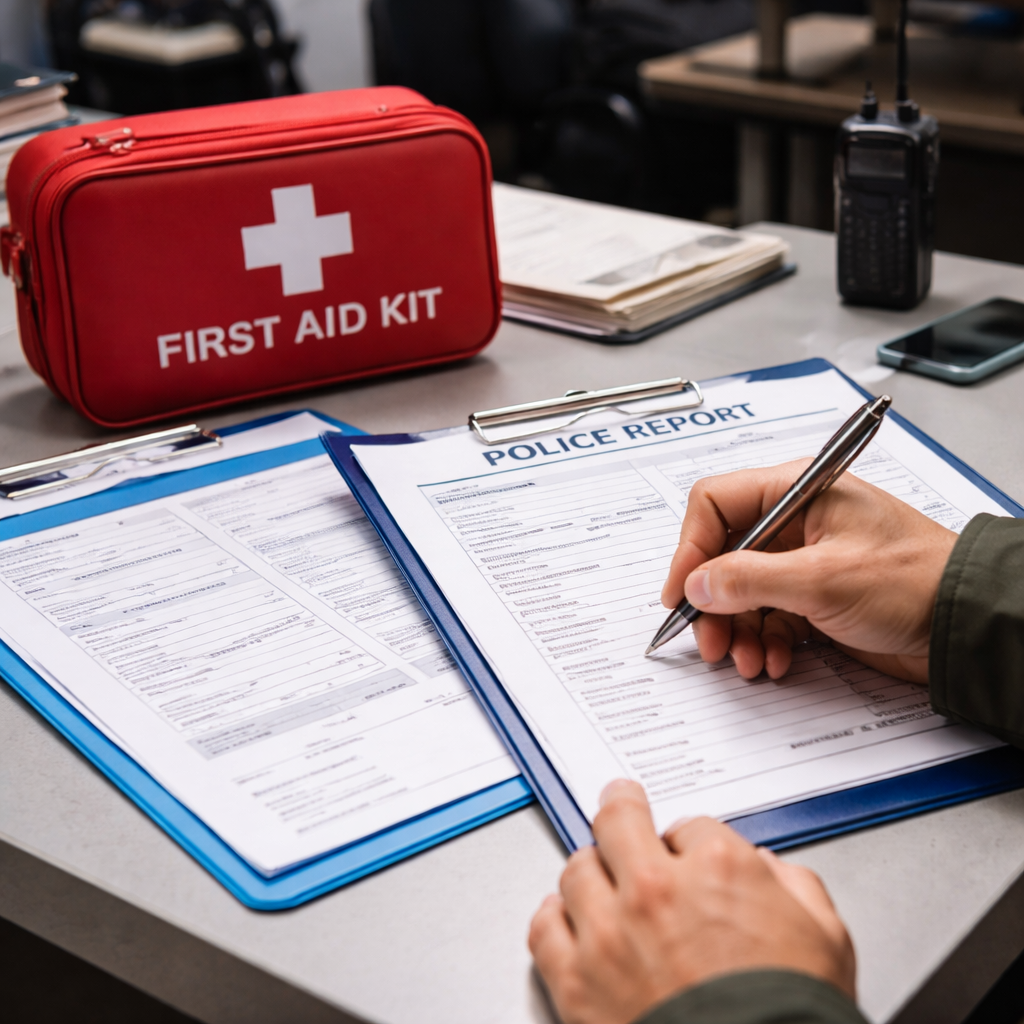
And remember: the sooner you get care, the stronger your personal injury claim timeline becomes.
Step 2: Gather Evidence and Document Injuries
Now that you have medical proof, it’s time to collect everything else that shows what happened. Evidence is the backbone of the personal injury claim timeline.
Start with the police report. Check it for mistakes , wrong address, misspelled name, or missing witness names. If you spot an error, call the officer’s desk and ask for a correction. A clean report saves headaches later.
Next, take photos. Use your phone’s camera to snap the accident scene, any damage, and your injuries. Take a wide shot of the whole area, then close‑ups of bruises or broken items. Put a coin or ruler in the frame for scale.
Here’s a quick checklist you can follow:
- Police report (official copy)
- Photos of the scene and injuries (timestamped)
- Witness names, phone numbers, and short statements
- All medical records, bills, and prescriptions
- Receipts for out‑of‑pocket costs , bandages, crutches, etc.
Keep everything in one folder, either on your computer or in a physical binder. Label each item with the date and a short description. This organization shows insurers you take the claim seriously.
For deeper insight on what to collect, see the True North checklist. It breaks down each document type step by step. Another solid source is Fight Negligence, which warns against posting recovery activities on social media.
And here’s a tip you can act on right now: set up a spreadsheet with columns for Date, Document Type, Source, and Status (collected, pending, filed). This simple tool keeps you on track as the personal injury claim timeline moves forward.
Use the internal link to learn more about estimating damages: How to Use a Personal Injury Claim Calculator. It will help you see how each piece of evidence adds value to your case.
Step 3: File the Claim and Understand the Timeline
With evidence in hand, you or your attorney will file a formal claim. This step officially starts the personal injury claim timeline.
First, you must respect the statute of limitations. In most states, you have two years from the accident date to file a lawsuit. Missing that deadline means you lose the right to recover any money.
Florida, for example, gives you two years for negligence claims. Rick’s blog breaks down the exact dates and exceptions you should watch for.
After you confirm the deadline, your lawyer drafts a complaint and submits it to the appropriate court. The court then serves the at‑fault party, who must respond within a set period.
While the paperwork moves, the personal injury claim timeline includes a discovery phase. Both sides exchange information, answer written questions, and may schedule depositions. This can take months, depending on how complex the case is.
Here’s a rough schedule you might see:
- File complaint , Week 1
- Defendant’s answer , Weeks 2‑4
- Discovery (documents, interrogatories, depositions) , Months 2‑6
- Pre‑trial motions , Months 6‑8
- Settlement talks or trial , Month 9 onward
Every step adds time, but it also adds use. The more solid your evidence, the faster the other side may want to settle.
Don’t forget to keep a copy of every filing receipt. Those receipts prove you met every deadline, which is crucial if the other side tries to claim you missed a date.
Finally, watch for any deadline extensions the court may grant. Extensions are rare and usually require a solid reason, like a medical emergency that stopped you from gathering documents.
Read more about the typical timeline from Morris Bart. Their guide explains why some cases settle in weeks while others take a year or more.
Step 4: Negotiations, Settlement Offers, and Potential Litigation
Once the claim is filed, most insurers will make a settlement offer. This is the point where the personal injury claim timeline can speed up or slow down.
Negotiations start with a demand letter. Your lawyer lists all damages , medical bills, lost wages, pain and suffering , and asks for a specific amount.
Insurers often reply with a lowball offer. That’s why you need the evidence you gathered earlier. Strong proof forces the adjuster to raise the number.
Here’s how a typical back‑and‑forth looks:
- Demand letter sent , Day 1
- Insurer’s response , Day 10
- Counter‑offer from you , Day 20
- Possible mediation , Day 30‑45
If talks stall, mediation may help. A neutral third party listens to both sides and suggests a middle ground. Most personal injury cases settle before reaching trial.
But be ready for litigation. If you reject an offer that you feel is too low, your lawyer will file a motion for trial. The personal injury claim timeline now adds a trial preparation phase, which can add months.
Challenges you might face:
| Challenge | How to Handle It |
|---|---|
| Lowball offer | Show detailed medical bills and a pain‑journal to justify a higher figure. |
| Liability dispute | Use police report and witness statements to prove fault. |
| Delay tactics | Set firm deadlines in your attorney’s communications. |
And remember, the insurance company’s goal is to pay as little as possible. That’s why you need a lawyer who can push back.
For a deeper look at the negotiation process, read Jimenez Law Firm’s guide. It walks through demand letters, counteroffers, and mediation.
Another useful read from the same firm explains why some settlements happen quickly while others drag on: Jimenez Law Firm’s settlement overview.
And if you’re a law firm looking to attract more clients, consider checking out Google Ads Agency for Tradies & Service Businesses. Their expertise can help you reach people who need help with their personal injury claim timeline.

Step 5: Closing the Claim and Post‑Settlement Steps
When you and the insurer finally agree, the case moves to the closing stage. This is the last part of the personal injury claim timeline.
The settlement agreement outlines the payment amount, the date it will be paid, and a release that stops the other side from suing again. Read it carefully before you sign.
After you sign, the insurer usually issues a check within 30 days. Deposit the money into a safe account. Many people open a separate savings account just for settlement funds.
Now think about what to do with the money. Here are three smart steps:
- Pay all medical bills first. Some providers may require a signed release before they accept the payment.
- Set aside money for future medical care. Even if you feel better now, injuries can flare up later.
- Invest a portion for long‑term security. A financial advisor can help you plan for retirement or education costs.
Don’t forget to keep all settlement paperwork for at least three years. The tax code can be tricky, and you may need these records if the IRS asks for proof.
The Hadilawfirm notes that the Texas Timely Billing Law forces providers to send bills quickly, which can help you track expenses right after a settlement. Read more at The Hadilawfirm timeline page. It also reminds you to check for any remaining liens that might reduce your final payout.
Finally, if you’re still dealing with pain or emotional distress, consider counseling or a support group. Healing isn’t just physical; it’s mental too.
For a quick post‑settlement checklist, you can use the same spreadsheet you used to track evidence. Add columns for "Paid", "Pending", and "Saved for Future".
And if you ever need to revisit the claim, the paperwork you kept will make it easy to answer any follow‑up questions from the insurer or a court.
Conclusion
Walking through the personal injury claim timeline doesn’t have to feel like a maze. Start by reporting the accident and getting medical care right away. Then gather every piece of proof you can. File the claim before the deadline, and let the discovery process build your case. Negotiate hard, know when to settle, and if needed, be ready for trial. Finally, close the claim with a clear settlement, keep good records, and plan how to use the money wisely.
Take these steps one at a time, and you’ll protect your rights while you focus on getting better. If you need a lawyer who works on a no‑win‑no‑fee basis, you can explore options online, but always choose someone with solid experience in your state.
Ready to start? Begin by calling a trusted personal injury attorney today and let them guide you through each phase of the personal injury claim timeline.
Frequently Asked Questions
What is the typical deadline to file a personal injury claim?
Most states give you two years from the accident date to file a lawsuit. Some states have shorter periods for certain types of injuries, like medical malpractice, which may be as short as one year. Check your state’s statute of limitations early, because missing the deadline ends your personal injury claim timeline.
Do I need a lawyer to handle a personal injury claim?
You don’t have to hire a lawyer, but the personal injury claim timeline can be complex. A lawyer knows how to gather evidence, negotiate with insurers, and protect your rights. Many work on a contingency fee, so you pay nothing unless you win.
How soon should I see a doctor after an accident?
See a medical professional within 24 hours, even if you feel fine. Prompt treatment links your injuries to the accident, which is a key part of the personal injury claim timeline. It also creates a record that insurers can’t easily dispute.
What kinds of damages can I recover?
You can claim economic damages like medical bills and lost wages, and non‑economic damages such as pain, suffering, and loss of enjoyment of life. The amount you receive depends on the strength of your evidence and how well you present your personal injury claim timeline.
Can I settle my claim before a lawsuit goes to trial?
Yes. Most cases settle during the negotiation phase of the personal injury claim timeline. A settlement saves time, legal fees, and the stress of a trial. Your lawyer will help you weigh offers against the value of your documented losses.
What should I do if the insurance company offers a low settlement?
Don’t accept the first offer. Provide the insurer with a detailed medical journal, bills, and a clear timeline of lost income. Your lawyer can file a counter‑offer and may request mediation to push the settlement higher.
How do I protect my settlement money?
Open a separate account for the funds, pay any medical liens first, and keep all paperwork for at least three years. Consider meeting with a financial planner to invest part of the money for long‑term security.
Think you have a case?
Our network of personal injury attorneys offers free consultations — no fees unless you win.
Get Your Free Case Review →